Cloudion
In today’s tech-driven world, choosing the right GPU server manufacturer is essential for businesses. GPUs power everything from AI and deep learning to gaming and 3D rendering. With numerous manufacturers in the market, it can be overwhelming to decide which one suits your needs.
Renowned brands offer advanced products, yet reliability varies. Some companies excel in performance, while others shine in customer support. Evaluating their history and expertise is crucial. A trusted GPU server manufacturer should have a solid track record and thorough understanding of the technology.
Moreover, each manufacturer has unique selling points. Some prioritize cost-effectiveness, while others focus on innovation. Recognizing your specific requirements can guide you to the right choice. While many products are impressive, not all will fit seamlessly into your infrastructure. Research is vital to avoid purchasing mismatched solutions. Balancing performance with practical needs is an art, one that reflects your strategic vision.
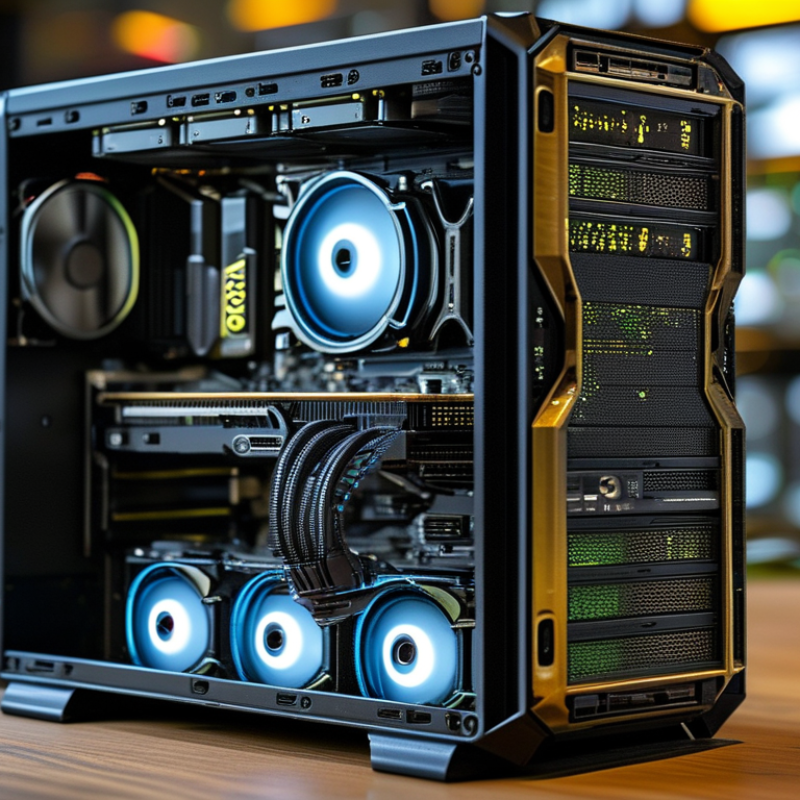
GPU servers have become crucial in modern computing, especially in fields like
artificial intelligence, machine learning, and data analytics.
According to a recent industry report, the global GPU server market is projected to reach USD 15 billion by 2026, with a
compound annual growth rate (CAGR) of over 30%. This rapid growth is driven by the increasing demand for
high-performance computing. Organizations are looking for faster processing power to handle large datasets efficiently.
The ability of GPU servers to perform parallel processing gives them an edge. Traditional CPUs process tasks
sequentially, but GPUs can handle thousands of threads simultaneously. This performance boost is vital for tasks like deep learning,
where training models on massive datasets is common. Research indicates that using GPU servers can reduce training time by up to 80%.
However, not every organization implements GPU technology effectively. Some may struggle with integration, requiring a reevaluation of their
IT strategies.
Moreover, the cost of ownership for GPU servers can be significant. While they offer high performance, power consumption is
a critical factor. An analysis shows that operational costs can increase dramatically if energy efficiency is not considered. Organizations must balance
performance with expenses, ensuring a sustainable approach to deploying these powerful servers. These reflections highlight the need for careful
planning and execution in adopting GPU technology.
When considering a GPU server, key features can significantly impact performance. The first aspect to evaluate is the GPU type. Different tasks demand distinct GPUs. For instance, machine learning benefits from specialized GPUs designed for parallel processing. Ensure compatibility with your software as well.
Next, pay attention to memory capacity. Sufficient RAM is crucial for handling large datasets. It enables smooth execution of complex algorithms without slowdowns. However, opting for too much memory can lead to wasted resources and budget constraints. Conducting a thorough analysis of your needs is essential.
Cooling and power supply are often overlooked but critical. High-performance GPUs generate substantial heat. An efficient cooling system prevents overheating, ensuring optimal operation. The power supply units should also match the energy demands of the components. Over or under-provisioning can lead to performance bottlenecks. Balancing these factors will enhance your server's reliability and effectiveness in various applications.
| Manufacturer | GPU Models | Processor Options | Memory Capacity | Storage Options | Cooling Solutions |
|---|---|---|---|---|---|
| Manufacturer A | NVIDIA A100, A40 | Intel Xeon, AMD EPYC | Up to 1TB | SSD, HDD | Liquid Cooling |
| Manufacturer B | AMD Radeon Pro | AMD EPYC | Up to 512GB | NVMe SSD | Air Cooling |
| Manufacturer C | NVIDIA RTX 3090 | Intel Core i9, AMD Ryzen | Up to 256GB | SAS, SATA | Hybrid Cooling |
| Manufacturer D | NVIDIA Quadro | Xeon Scalable | Up to 1TB | High-Speed SSD | Liquid Cooling |
| Manufacturer E | NVIDIA T4 | Intel Xeon | Up to 512GB | SSD, HDD | Air Cooling |
| Manufacturer F | AMD Radeon Pro VII | AMD Ryzen Threadripper | Up to 256GB | SATA SSD | Hybrid Cooling |
| Manufacturer G | NVIDIA V100 | Intel Xeon Gold | Up to 1TB | NVMe, SATA | Liquid Cooling |
| Manufacturer H | NVIDIA RTX A6000 | AMD EPYC | Up to 512GB | High-Speed NVMe | Air Cooling |
| Manufacturer I | AMD Radeon Pro WX | Intel Core i7 | Up to 128GB | Mixed Storage | Air Cooling |
| Manufacturer J | NVIDIA DGX | IBM Power | Up to 1.5TB | Enterprise SSD | Liquid Cooling |
When selecting a GPU server manufacturer, several key criteria should be prioritized.
Performance is crucial. According to a recent industry report, the demand for high-performance computing solutions has increased by 40% in the past year alone. Manufacturers must offer powerful GPUs that can handle complex computations efficiently.
Scalability is another vital factor. Businesses often seek systems that can easily scale with their growing data needs. A flexible architecture can save time and resources.
Reliability also matters; a well-designed server should minimize downtime. A study found that a single hour of downtime can cost companies an average of $300,000.
Cost-effectiveness rounds out the selection criteria. The total cost of ownership should include not just initial purchase price but also maintenance and energy consumption. Many organizations struggle with balancing budget constraints and performance needs. Understanding these factors is essential in choosing the right manufacturer for GPU servers.
When exploring the landscape of GPU server manufacturing, it's essential to analyze leading companies through specific criteria. Performance is a critical aspect. Key specifications like processing power, thermal design, and energy efficiency can make or break your decision. Consider how these factors influence the overall performance in demanding applications like AI training and deep learning.
Another vital consideration is customer support. Reliable support can save time and resources during critical operations. Companies often differ in their response times and availability of expert troubleshooting. Customer feedback frequently highlights these experiences, underscoring the importance of robust service channels.
Additionally, pricing structures should be evaluated closely. Many providers offer a wide range of configurations, which can make comparisons challenging. Understanding hidden costs, such as licensing fees or additional hardware, is necessary. Beware of potential pitfalls in a seemingly attractive offer; always look for transparent pricing models that align with your budget and operational needs.
When selecting a GPU server, performance and pricing are crucial factors. High-performance servers often come with premium prices. Budget constraints may limit options. It's essential to assess what features matter most, like processing power, memory, and cooling systems. Some users may prioritize speed over cost, while others seek balance.
Comparing different manufacturers reveals significant differences. Some servers deliver superior performance and higher efficiency. However, these may not always represent the best value for money. Price-to-performance ratios vary widely across models. Therefore, buyers need to analyze their specific workloads. Can the server handle intensive tasks like machine learning or graphic rendering? Evaluating real-world benchmarks is vital.
Another aspect to consider is the potential for scalability. Systems that adapt to growing demands can save costs long-term. Some GPU servers may seem cheaper initially but require upgrades soon. Calculating total cost of ownership gives a better financial perspective. It's often a complex landscape requiring thoughtful exploration and reflection.
: The GPU type is crucial. Different tasks need specific GPUs, especially for parallel processing in machine learning.
Sufficient RAM is vital for handling large datasets. It ensures smooth execution of complex algorithms without lag.
High-performance GPUs generate a lot of heat. An efficient cooling system prevents overheating and maintains optimal operation.
The power supply must match the GPU's energy needs. Over or under-provisioning can cause performance issues.
Performance, scalability, reliability, and cost-effectiveness are key. These elements impact overall efficiency and expenditures.
A single hour of downtime can cost up to $300,000. Minimizing downtime is essential for operational efficiency.
Not necessarily. Some high-performance models may not provide the best value considering their high initial costs.
The right balance is essential. A server with superior performance may not offer the best economic return.
Real-world benchmarks help assess if a server can handle specific workloads like machine learning or graphic rendering.
Systems that scale with data demands can save costs in the long term. Less scalable options might require frequent upgrades.
In the realm of modern computing, GPU servers play a crucial role in enhancing performance, particularly for tasks related to artificial intelligence, machine learning, and complex simulations. When selecting a GPU server manufacturer, it’s essential to consider various key features, such as the server's architecture, cooling efficiency, scalability, and support services.
The article outlines the top ten GPU server manufacturers based on criteria like performance, reliability, customer satisfaction, and pricing, offering in-depth profiles of each leading manufacturer. This comparative analysis assists organizations in making informed decisions, ensuring they choose a manufacturer that aligns with their specific computing needs and budget constraints. By understanding these factors, businesses can leverage the capabilities of GPU servers to drive innovation and efficiency in their operations.
