Cloudion
China’s AI server market is expanding across cloud computing, research, manufacturing, finance, and autonomous systems. The top ai server manufacturers compete through accelerator support, thermal design, supply reliability, and service coverage.
This guide examines ten influential companies, including established hardware brands and specialized computing providers. It considers practical details, such as GPU compatibility, rack density, networking speed, deployment support, and energy consumption. A modern server may contain eight accelerators, high-speed interconnects, and several kilowatts of power demand. These specifications affect performance, operating costs, and data-center planning.
The market moves quickly. Product availability can change with export controls, chip supply, and domestic procurement policies. Company rankings should therefore be viewed as a practical comparison, not a permanent verdict. Public announcements also do not always equal verified field performance. Claims need checking. We will distinguish documented capabilities from promotional language wherever possible. The discussion draws on manufacturer information, technical documentation, industry experience, and observable deployment trends. It also recognizes an important limitation: some vendors disclose limited benchmark data, making direct comparisons imperfect. That uncertainty matters.
Readers will find a clearer way to assess Chinese AI server suppliers for training, inference, and enterprise workloads. The strongest choice may not be the fastest machine. It may be the system that remains supportable, compatible, and efficient after installation.
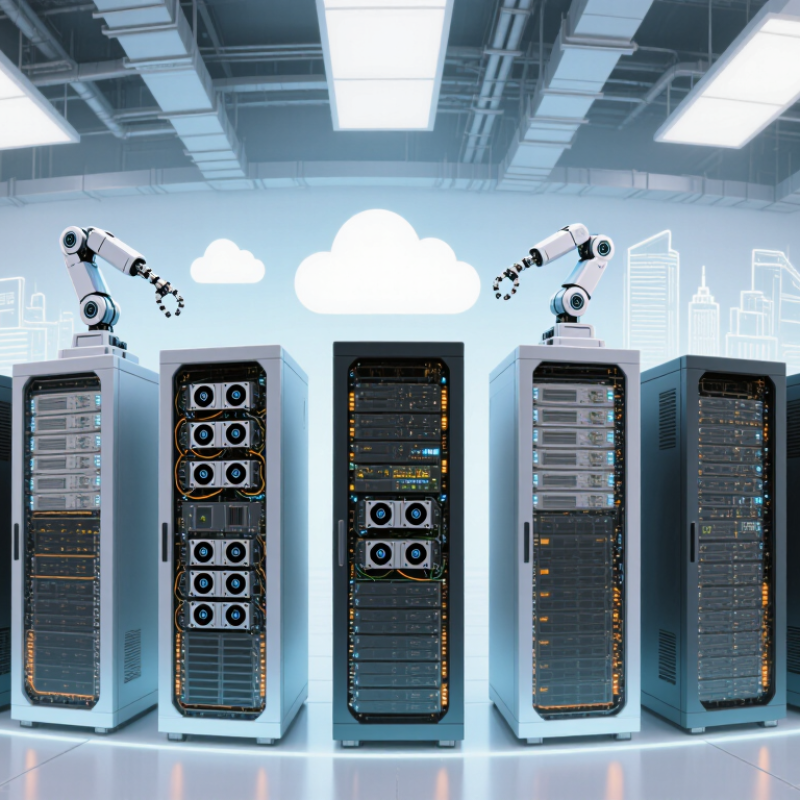
Definition and Scope of AI Server Manufacturing in China
AI server manufacturing in China covers more than assembling a metal chassis. It includes accelerator integration, CPU selection, memory, storage, networking, firmware, thermal design, testing, and delivery support. Manufacturers may also configure systems for training, inference, scientific computing, or private data centers. The boundary is not perfectly clean.
The China Academy of Information and Communications Technology reported about 230 EFLOPS of total computing power in China during 2023. Its findings show why AI server production now depends on dense computing, reliable power delivery, and advanced cooling. TrendForce forecast global AI server shipments to grow 28% in 2025. That figure signals strong demand, but it does not measure China’s factory output directly.
In practical procurement, scope should include the full validation chain. Engineers test accelerator stability, airflow, rack density, firmware compatibility, and continuous workloads. Liquid cooling can reduce heat concentration, yet it adds maintenance requirements and water-management concerns. Manufacturing quality also depends on component traceability and repeatable testing, not only processor performance. Some market discussions still treat an AI server as a faster conventional server. That view is incomplete. A better definition includes hardware integration, software readiness, facility compatibility, and after-sales engineering.
AI server manufacturing covers system architecture, accelerator and CPU integration, high-speed networking, memory and storage configuration, power delivery, thermal management, chassis engineering, testing, and rack-level deployment. The chart shows standard rack-unit chassis heights commonly used in server manufacturing and AI infrastructure integration. One rack unit (1U) equals 1.75 inches or 44.45 millimeters under the EIA-310 rack standard.
In ranking the top ten AI server manufacturers in China, I would not begin with advertising claims. Experience matters. The evaluation should examine product reliability, engineering depth, and consistent delivery records. Test results must cover computing performance, memory bandwidth, cooling stability, and power consumption under sustained workloads. Short demonstrations can hide thermal problems.
A credible manufacturer should provide traceable certifications, clear warranty terms, and documented quality controls. I would review failure rates, repair times, spare-part availability, and technical support response. Customer references from research laboratories, cloud operators, and industrial users can reveal practical performance. Supply chain resilience also matters, especially during component shortages. Domestic production capacity is useful, but it should not replace transparent evidence.
The ranking should assign weighted scores rather than rely on one impressive specification. For example, reliability and service could outweigh a small performance advantage. Energy efficiency deserves attention because data centers operate continuously. Secure firmware, controlled software updates, and lawful data handling should be verified through independent audits. Some information may remain difficult to confirm. That limitation should be disclosed, not ignored. A manufacturer with fewer public announcements may still deserve a higher position if its field records are stronger. My own scoring model would benefit from more long-term data, particularly from smaller facilities and demanding regional climates.
China’s top AI server manufacturers differ in scale, focus, and engineering depth. Some build dense training systems with eight or more accelerators, while others target inference, edge computing, or general enterprise workloads. Their product lines commonly include rack servers, liquid-cooled systems, storage nodes, and high-speed networking equipment. Company profiles should examine factory capacity, quality controls, delivery records, and technical support rather than relying on brochure claims.
Core technologies reveal larger differences. Leading suppliers develop accelerator interconnects, PCIe expansion designs, high-bandwidth memory support, and software for scheduling distributed workloads. Several use direct-to-chip liquid cooling, which can reduce heat in tightly packed racks. Others optimize air cooling for easier maintenance. A useful test involves loading a model, measuring power draw, checking recovery after a failed node, and reviewing logs from the management platform. Small details matter.
The comparison is not perfect. Public performance figures may use different datasets, software versions, or cooling conditions. That makes simple rankings questionable. Some manufacturers offer strong hardware but limited ecosystem compatibility. Others provide mature integration services, yet their customized systems may cost more to maintain. Buyers should request verified benchmarks, component-level warranties, security documentation, and replacement timelines. A quiet data center is valuable. So is predictable support.
China’s leading ten AI server manufacturers compete through production capacity, supply-chain control, and market fit. TrendForce forecasts global AI server shipments to grow about 28% in 2025, reaching nearly 1.9 million units. This demand is reshaping Chinese factories. Large producers now combine rack integration, liquid cooling, motherboard assembly, and testing under one industrial network. Smaller specialists often depend on external accelerators and imported high-speed components. That creates uneven delivery times.
Supply chains matter more than attractive specifications. A reliable manufacturer should show monthly rack output, thermal testing records, component traceability, and backup suppliers. IDC reports that China remains one of the world’s fastest-growing data-center markets, supported by cloud computing, public-sector digitization, and industrial AI. However, capacity figures are not always comparable. Some companies count assembled servers; others count complete racks. Buyers should ask for both figures. Numbers can look better than reality.
Tips: Check a factory’s recent delivery history, not only its stated capacity. Request sample burn-in results at realistic workloads. Confirm power density, cooling requirements, and local service coverage. Target markets also differ. Cloud providers need standardized, high-volume systems. Universities prefer flexible GPU expansion. Financial and manufacturing customers usually value security, maintenance, and predictable deployment. Export-oriented suppliers face stricter compliance checks and longer logistics planning. This part is often underestimated. Industry reports provide useful direction, but on-site audits still reveal practical weaknesses, including delayed parts, crowded testing bays, and limited technician coverage.
China’s top AI server manufacturers are expanding as demand shifts from general computing to accelerated infrastructure. The China Academy of Information and Communications Technology reported that China’s intelligent computing capacity reached about 67 EFLOPS in 2023. It may exceed 117 EFLOPS by 2025. This growth supports training clusters, medical imaging, industrial simulation, and language-model services.
The market is crowded. TrendForce projected global AI server shipments would grow by roughly 37% in 2024. Chinese suppliers face shortages in advanced processors, high-bandwidth memory, and liquid-cooling components. Delivery speed matters, but efficiency matters more. A server that consumes excessive electricity can weaken a customer’s business case.
Competitive pressure is moving toward complete systems, not isolated hardware. IDC’s infrastructure research shows that cloud and service providers remain major buyers of accelerated computing. Manufacturers must therefore prove stable performance across long workloads, dense racks, and difficult operating environments. China’s data-center construction also faces power and cooling constraints. These limits are easy to underestimate.
Future growth will depend on domestic supply chains, open software ecosystems, and stronger testing standards. Buyers increasingly request measurable results, including performance per watt and model-training time. That is sensible. Yet the industry still promotes peak benchmark scores more often than real production output. This gap deserves closer examination. Forecasts look impressive, but deployment quality will decide which manufacturers remain competitive.
It includes accelerator integration, CPU selection, memory, storage, networking, firmware, cooling, testing, and delivery support. It is more than assembling a metal chassis. Manufacturers may configure systems for training, inference, research, or private data centers. The boundary remains imperfect.
Dense computing creates concentrated heat inside racks. Air cooling may work for moderate loads, while liquid cooling can reduce heat concentration. Liquid systems also require maintenance, leak controls, and water management. Heat is not theoretical.
Ranking should consider reliability, engineering depth, delivery history, and service quality. Product demonstrations alone can hide thermal or stability problems. Weighted scoring is more useful than one impressive specification. My scoring model still needs longer field data.
Request sustained workload tests, accelerator stability results, memory bandwidth data, airflow checks, and power measurements. Ask for burn-in records using realistic workloads. Short tests may miss failures after several hot hours. Request details, not slogans.
AI servers depend on accelerators, high-speed components, memory, storage, and power systems. Shortages can create uneven delivery times. Buyers should ask about backup suppliers and component traceability. Capacity figures can mislead.
Ask whether reported output means individual servers, complete racks, or tested systems. Request monthly production figures and recent delivery records. Compare similar measurements across suppliers. Bigger numbers are not always better.
Cloud operators often need standardized systems and high-volume delivery. Universities may prefer flexible accelerator expansion. Financial and industrial users usually value security, maintenance, and predictable deployment. One design rarely fits everyone.
Inspect testing bays, technician coverage, spare-part storage, and workload validation areas. Review warranty terms, repair times, firmware controls, and service response records. Ask to see recent delivery evidence. Audits can still miss hidden weaknesses. That limitation matters.
This article examines the development of China’s AI server manufacturing sector, defining its scope across hardware design, system integration, manufacturing, software optimization, and related supply-chain services. It explains the criteria used to identify the top ai server manufacturers, including computing performance, product reliability, research and development capabilities, production scale, energy efficiency, delivery capacity, and customer support. The discussion also outlines major product categories, core technologies, manufacturing resources, supply-chain structures, and target markets without focusing on individual brand names.
In addition, the article explores how these manufacturers serve data centers, cloud platforms, research institutions, and enterprise users with increasingly specialized computing requirements. It considers current industry trends such as accelerated computing, liquid cooling, modular architectures, domestic supply-chain development, and demand for lower operating costs. The analysis concludes by highlighting competitive challenges, including technology investment, component availability, international market complexity, and sustainability, while identifying opportunities for future growth through innovation, flexible production, and broader global cooperation.
