 Cloudion
Cloudion
Cloudion
Choosing the best ai server manufacturer requires more than comparing processor names or glossy performance charts. Global buyers need dependable engineering, transparent support, and systems that fit real workloads. A training cluster may demand eight high-memory GPUs, fast interconnects, liquid cooling, and carefully balanced power delivery. An inference platform may prioritize compact density, predictable latency, and lower operating costs.
Jensen Huang, NVIDIA’s founder and CEO, has repeatedly emphasized the importance of accelerated computing. His widely quoted statement, “The more you buy, the more you save,” reflects AI infrastructure’s economic reality: larger deployments can improve efficiency, but only when utilization remains high. That condition matters. More hardware does not automatically create better results.
This guide examines leading AI server manufacturers for global buyers. It considers GPU compatibility, rack design, thermal management, firmware quality, remote administration, warranty coverage, and regional service capacity. It also looks beyond peak benchmark scores. A server that performs brilliantly in a laboratory may struggle in a crowded data center.
Real purchasing decisions are messier. Delivery schedules change. Power limits appear late. Cooling assumptions prove optimistic. Even experienced teams can overlook cable layout or replacement-part access. That is why vendor documentation, independent testing, and customer references deserve close attention.
No manufacturer fits every deployment. Budget, workload, geography, compliance needs, and expansion plans all influence the outcome. The strongest choice is not always the most famous brand. It is the supplier that delivers stable performance, practical support, and a credible path for future growth.
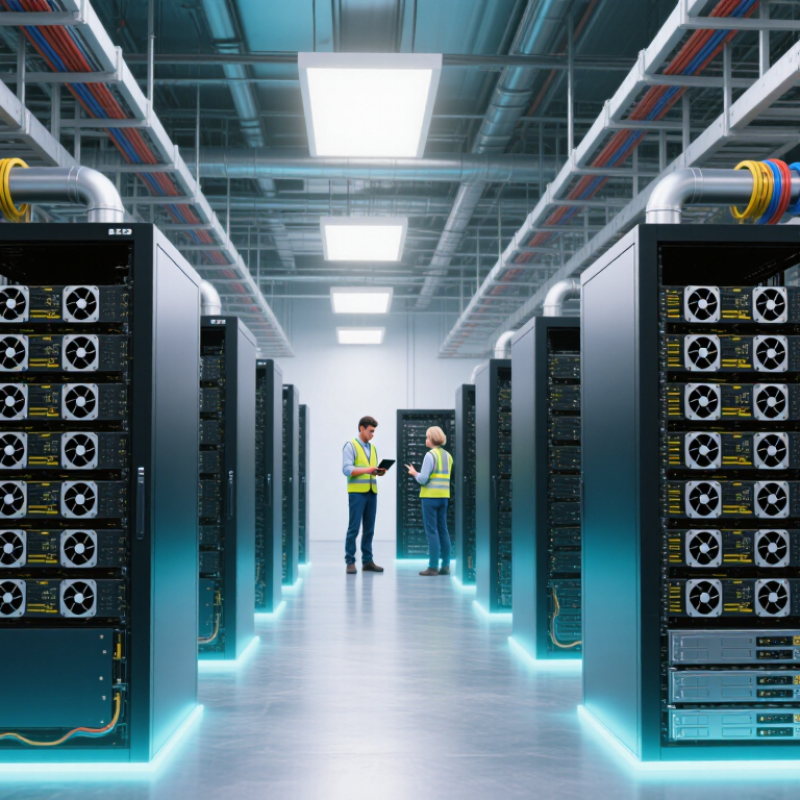
AI server manufacturers are companies that design, assemble, test, and support computing systems for artificial intelligence workloads. These systems usually combine high-performance processors, accelerators, fast memory, storage, and advanced cooling. Their role extends beyond selling hardware. They translate demanding model-training requirements into stable, serviceable infrastructure.
In real deployment reviews, details often decide performance. A server may sit in a crowded data-center rack, drawing substantial power while running for weeks. Manufacturers must validate airflow, thermal limits, firmware behavior, and component compatibility. They also provide technical documentation, warranty coverage, security updates, and replacement procedures. Reliable manufacturers publish test results and maintain traceable quality controls. Those practices help global buyers compare products with greater confidence.
However, evaluation is rarely perfect. A strong benchmark may not reflect a buyer’s actual workload. I have seen specifications look impressive while installation guidance remained unclear. That gap matters. Manufacturers should explain performance assumptions, energy consumption, delivery limits, and regional service capabilities in plain language. Buyers should question unsupported claims and request evidence from controlled tests. The best supplier relationship is not passive. It involves engineers, procurement teams, and support staff reviewing risks before the first server reaches the rack. Mistakes still happen. Honest communication makes them easier to manage.
| Manufacturer Profile | Primary Market Role | Typical AI Server Formats | Accelerator Support | Cooling Capability | Target Buyer | Key Selection Factors |
|---|---|---|---|---|---|---|
| Global Tier-One OEM | Designs and manufactures standardized enterprise servers with worldwide support and validated configurations. | 1U, 2U, 4U, and multi-node GPU systems | PCIe and SXM-class accelerator platforms, depending on the system design | Advanced air cooling; selected systems support direct liquid cooling | Large enterprises, research institutions, and public-sector data centers | Global service coverage, certifications, lifecycle management, and integration support |
| High-Density AI Specialist | Focuses on dense GPU computing, accelerated workloads, and high-performance cluster deployment. | 4U to 8U GPU servers and dense compute nodes | Multi-accelerator configurations for model training, inference, and simulation | High-capacity air cooling and rear-door or direct liquid-cooling options | AI laboratories, cloud providers, universities, and national computing centers | Power density, thermal design, accelerator interconnects, and cluster scalability |
| ODM and Hyperscale Design Partner | Builds customized platforms for cloud operators and large buyers using open or semi-custom designs. | Rack-scale systems, sleds, trays, and custom chassis | Flexible accelerator, CPU, memory, and networking combinations | Air, rear-door heat exchangers, cold plates, and liquid-cooled rack designs | Hyperscale data centers, cloud service providers, and large-scale integrators | Customization, volume pricing, deployment speed, and supply-chain capacity |
| Enterprise Infrastructure Vendor | Provides AI-ready servers as part of a broader portfolio covering storage, virtualization, networking, and security. | General-purpose 1U and 2U servers with GPU expansion options | Entry-level to mid-range accelerator configurations for inference and analytics | Primarily air cooling, with selected liquid-cooling support | Corporate IT departments, managed-service providers, and regional data centers | Integration with existing infrastructure, security controls, warranties, and support contracts |
| Regional Server Manufacturer | Supplies cost-effective systems with local customization, installation, and after-sales service. | 1U, 2U, and 4U rack servers | Common PCIe accelerator configurations for training, inference, and visualization | Air cooling; liquid cooling is available in selected high-density models | Small and medium businesses, local institutions, and value-added resellers | Total cost of ownership, local inventory, response time, and configuration flexibility |
| Edge AI Server Manufacturer | Develops compact and rugged systems for processing data near cameras, machines, vehicles, or industrial equipment. | Short-depth rack servers, compact workstations, and rugged edge appliances | Low-profile or embedded accelerators optimized for inference | Air cooling with dust protection and enhanced environmental design | Factories, retail locations, telecommunications sites, and transportation systems | Operating temperature, compact size, connectivity, remote management, and reliability |
| Custom Cluster Integrator | Combines servers, networking, storage, software, and facilities into complete AI cluster solutions. | Rack-scale clusters and turnkey AI infrastructure | Multi-node accelerator clusters with high-speed fabric and shared storage | Air-cooled and liquid-cooled deployments based on rack power density | Organizations requiring deployment, optimization, and operational support | Cluster performance, network topology, software stack, commissioning, and maintenance |
It designs, assembles, tests, and supports servers for demanding AI workloads. These systems use powerful processors, accelerators, fast memory, storage, and advanced cooling. The work goes beyond selling hardware. It also includes documentation, security updates, warranties, and replacement procedures.
AI servers may run continuously for weeks in crowded racks. Poor airflow can raise temperatures and reduce stable performance. Manufacturers should test fans, thermal limits, rack density, and cooling options. Small thermal problems can become expensive failures.
Compare measured performance under sustained workloads, not only accelerator counts. Review performance per watt, temperature behavior, and software conditions. Ask for test logs or independent reports. Not every benchmark transfers.
Request quality records, component traceability, failure-rate definitions, and firmware procedures. Ask how tests were controlled and repeated. A polished presentation is not enough. Evidence matters more than impressive specifications.
Check regional technicians, response times, warranty coverage, and replacement procedures. Ask how quickly a failed power supply can be replaced. Confirm spare-parts availability in each target region. Support gaps hurt.
Review energy use, rack power requirements, power variation handling, and cooling demand. Data-center electricity use is a major planning concern. Compare energy consumption during long workloads. Low purchase prices may hide higher operating costs.
A scorecard gives clear values to service, energy use, security updates, warranty terms, and performance. It prevents low price from dominating every decision. Include integration labor and possible downtime. The weighting may still need revision.
Yes, a pilot batch can reveal installation, thermal, software, and support problems. Test servers in a similar climate and workload environment. Measure power use and sustained performance over time. Some assumptions will fail.
Ask manufacturers to explain performance assumptions, delivery limits, and regional service capabilities. Validate important claims through logs, references, or third-party testing. Leave room for changes after software tuning or workload shifts. Perfect certainty is unrealistic.
AI server manufacturers design and produce specialized computing systems that support artificial intelligence training, inference, analytics, and high-performance data processing. Their products typically combine advanced processors, accelerators, high-speed memory, efficient storage, networking technologies, and thermal management systems. Leading manufacturers serve different regional markets by adapting their solutions to local infrastructure, energy requirements, procurement practices, and service expectations.
For global buyers, selecting the best ai server manufacturer requires more than comparing hardware specifications. Important evaluation factors include product reliability, scalability, customization options, total cost of ownership, delivery capacity, technical support, warranty coverage, and long-term maintenance. Buyers should also examine supply-chain stability, component availability, data security practices, environmental standards, export documentation, and compliance with applicable laws in each destination market. A dependable manufacturer should provide transparent communication, consistent quality control, flexible deployment support, and a clear service network that can sustain AI workloads throughout the system’s operational lifecycle.
