Cloudion Cloudion

How to Choose an AI Server Manufacturing Company?

Time:2026-10-11 Author:Mason
0%

Choosing an ai server manufacturing company is a practical decision, not a branding exercise. The right partner can influence computing performance, deployment speed, operating costs, and long-term reliability. A polished website is useful, but it proves very little.

Begin by examining real manufacturing experience. Ask how the company designs servers for AI training, inference, and high-density workloads. Request details about GPU compatibility, liquid or air cooling, power distribution, rack dimensions, and firmware management. A credible manufacturer should explain these choices clearly. Technical answers should not sound like sales slogans.

Evidence matters more than promises. Review documented deployments, customer references, warranty terms, testing procedures, and support response times. If possible, inspect a sample system or request a controlled demonstration. Look for practical details, such as temperature records under sustained workloads, cable organization, noise levels, and replacement-part availability. Small details reveal operational maturity.

Standards matter too. Confirm that products meet applicable safety, electromagnetic compatibility, environmental, and data-center requirements in the intended market. Experienced engineers should discuss supply-chain risks and component substitutions openly. No company controls every disruption. That is worth admitting.

A strong ai server manufacturing company also asks about your workload before recommending hardware. It should consider model size, throughput targets, storage patterns, networking, software frameworks, and future expansion. Avoid vendors that push the most expensive configuration without measurable justification. More GPUs do not always mean better results.

The final choice should balance performance, serviceability, security, transparency, and total cost of ownership. Independent technical validation is valuable. So is a careful pilot project. In practice, the best partner may not be the largest manufacturer, but the one that communicates accurately and supports the system after installation. Reliability begins before the purchase order.
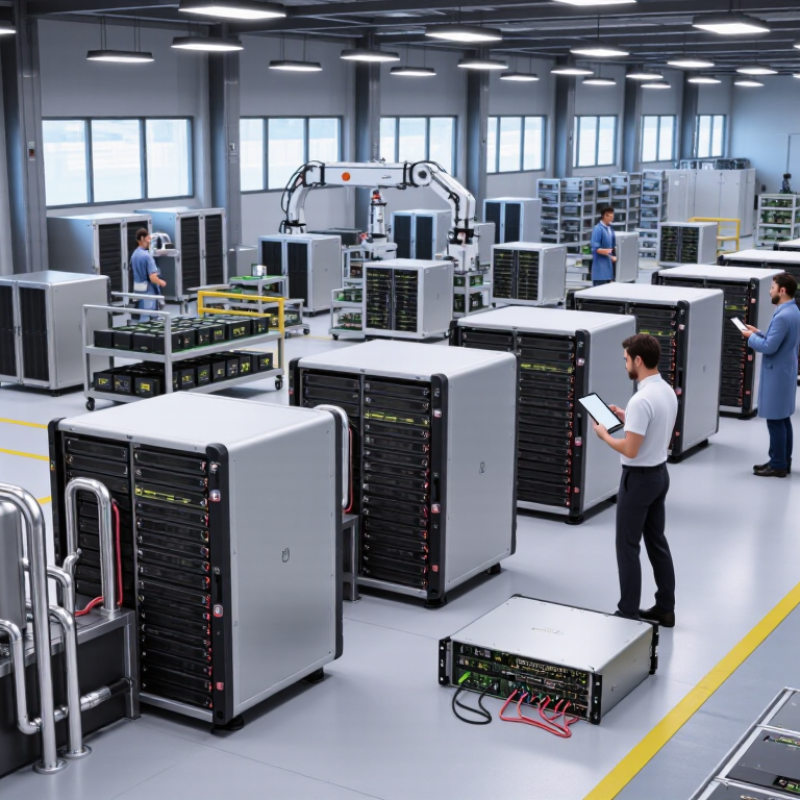
How to Choose an AI Server Manufacturing Company?

Define Your AI Server Requirements and Performance Goals

How to Choose an AI Server Manufacturing Company?

Define Your AI Server Requirements and Performance Goals

A capable supplier cannot compensate for unclear requirements. Define the workload first. Training, real-time inference, fine-tuning, and scientific simulation need different server designs. Record model size, dataset volume, response-time targets, daily request counts, and expected growth. Specify the accelerator quantity, memory capacity, storage speed, network bandwidth, and rack power limit. Keep it measurable.

Use benchmarks that resemble your workload. Peak performance alone can mislead. Measure tokens per second, training time, latency at the 95th percentile, and performance per watt. The International Energy Agency’s Electricity 2024 report projects data-center electricity use could exceed 1,000 TWh by 2026. Power efficiency is no longer a minor specification. It affects operating cost, cooling design, and site feasibility. Consider liquid cooling only when heat density justifies its complexity.

The Uptime Institute Global Data Center Survey 2024 also highlights continuing concerns about power availability and infrastructure efficiency.

Ask manufacturers for thermal test conditions, failure rates, service response times, firmware procedures, and component replacement plans. Request evidence from comparable deployments, not polished claims. A spreadsheet can still lie.

Leave headroom, but avoid buying theoretical capacity.

Oversizing wastes capital. Undersizing creates painful upgrades. A practical evaluation may include a small pilot using your own models, data pipelines, and monitoring tools. Document every result.

Some targets will change after testing, and that is acceptable. Requirements often look precise until real workloads arrive.

Assess the Manufacturer’s Engineering and Production Capabilities

An AI server manufacturer should prove more than a polished specification sheet.

Ask for thermal designs, power budgets, firmware controls, and rack-level validation records. A capable engineering team should explain GPU heat, uneven workloads, and memory failures.

Request sustained-load results, not short benchmark peaks.

Check inlet temperature, fan speed, liquid-flow rate, acoustic level, and recovery time. Small omissions can become expensive surprises.

Production capability matters just as much.

Visit the factory, if possible, and observe board inspection, cable routing, burn-in testing, and serial-number traceability. Ask how many systems can be built monthly without changing quality controls.

The International Energy Agency’s Electricity 2024 report estimates data centers used 460 TWh globally in 2022. Demand may reach 620–1,050 TWh by 2026.

Therefore, manufacturers should provide measured power efficiency, cooling performance, and rack-density data. Marketing estimates are not enough.

Uptime Institute’s 2024 Global Data Center Survey also emphasizes testing, maintenance, and operational discipline in resilient facilities.

Ask for failure-injection procedures, replacement-part availability, and firmware rollback plans.

I would also examine supplier dependency. One unavailable connector can delay an entire rack. A spreadsheet may look complete and still miss that weakness.

If the manufacturer refuses independent testing or shares only selected results, pause the evaluation. Confidence should come from repeatable evidence, although no production line is perfectly consistent.

Compare Hardware Design, Scalability, and Customization Options

How to Choose an AI Server Manufacturing Company?

A reliable AI server manufacturer should explain its hardware design clearly. Look for balanced computing, memory, storage, and networking, not impressive specifications alone. Ask how cooling works under continuous workloads. Airflow paths, fan control, heat sinks, and power delivery affect real performance. Request thermal test results from full-load operation. In my experience, small design details often decide system stability. Rack depth and cable access matter too. A server that is difficult to service can increase downtime.

Tips: Request a test unit when possible. Run your own models, monitor temperatures, and check power consumption. Review burn-in procedures, firmware controls, warranty terms, and replacement timelines. Avoid vague performance claims. Numbers need conditions.

Scalability should match your expected workload, budget, and facility limits. Confirm whether the platform supports additional accelerators, memory expansion, faster networking, and storage upgrades. Ask about rack density and future power requirements.

Customization may include chassis layouts, operating systems, security settings, remote management, and specialized cooling. However, excessive customization can create maintenance problems. My earlier evaluations sometimes focused too much on peak speed. That was a mistake.

Standardized components can simplify repairs and spare-part planning. A capable manufacturer will document compatibility, validate each configuration, and provide clear deployment guidance. It should also explain limitations honestly. That answer matters.

Verify Quality Standards, Security Measures, and Technical Support

Choosing an AI server manufacturing company requires more than comparing processor speed or rack prices. Verify quality standards through current certificates, factory audit records, and component traceability. Ask for thermal test results, burn-in procedures, and failure rates from recent production batches. A reliable manufacturer should explain how each server is inspected before shipment. Vague answers deserve caution.

Security must cover hardware, firmware, data, and access procedures. Request evidence of secure boot, firmware signing, vulnerability handling, and controlled supplier access. Check whether technicians follow documented identity verification and incident-response processes. Also examine how defective drives, logs, and returned equipment are handled. A polished security statement can still hide weak daily controls.

Tips: Test technical support before signing. Send specific questions and measure response time, clarity, and escalation quality. Confirm support hours, replacement-part availability, remote diagnosis, and on-site service terms. Ask for sample maintenance reports and named technical roles, not only a general help desk address. No checklist is perfect. Leave room for independent testing, because promised support may feel different after installation.

Evaluate Pricing, Delivery Terms, Warranty, and Long-Term Reliability

Choosing an AI server manufacturing company requires more than comparing the lowest quotation. IDC’s Worldwide AI and Generative AI Spending Guide projected global AI infrastructure spending at about $154 billion in 2024. That scale increases demand, but it can also expose weak capacity planning. Request an itemized price covering GPUs, memory, networking, rack integration, testing, shipping, and installation. Ask whether the quotation remains valid during component price changes. Cheap hardware may become expensive after delays and compatibility fixes.

Delivery terms deserve the same scrutiny. Require a written production schedule, inspection milestone, shipment date, and remedy for missed deadlines. Request serial-level test reports before dispatch. A factory that cannot explain burn-in testing clearly deserves caution. I have seen projects fail because “ready to ship” meant only that the chassis existed. Confirm power requirements, thermal limits, export documents, and on-site acceptance procedures.

Warranty language should specify response time, replacement logistics, spare-part availability, and exclusions. Uptime Institute’s 2024 Global Data Center Survey shows that serious outages can create costs above $100,000, making support speed financially important. Ask for remote diagnostics and an escalation path beyond the sales contact. The manufacturer should provide firmware updates and compatible parts for several years. Gartner’s widely cited estimate places downtime costs near $5,600 per minute, although actual losses vary greatly by workload. That estimate is imperfect, but ignoring downtime is worse. Evaluate field-service records, failure rates, independent references, and total operating cost before signing.

How to Choose an AI Server Manufacturing Company? - Evaluate Pricing, Delivery Terms, Warranty, and Long-Term Reliability

Evaluation Dimension Measurable Indicator Strong Benchmark Acceptable Benchmark Evidence to Request
Pricing Transparency Quotation completeness and cost structure Low Risk
Itemized pricing includes the server chassis, processors, accelerators, memory, storage, networking, operating system, testing, packaging, shipping, taxes, and support.
Review Required
Most hardware is itemized, but installation, export documentation, freight, or support charges are listed separately.
Formal quotation, bill of materials, payment schedule, tax treatment, freight terms, and a written list of exclusions.
Total Cost of Ownership Three- to five-year ownership cost The calculation includes purchase price, power consumption, cooling, maintenance, spare parts, software support, and expected downtime. The supplier provides purchase price and basic support costs, while energy and facility costs must be estimated separately. Power-draw data under representative workloads, recommended cooling requirements, maintenance rates, and replacement-part pricing.
Payment Terms Deposit, balance, and payment protection A staged structure such as 20–40% deposit, balance after factory acceptance testing, with clearly defined acceptance criteria. A deposit is required before production and the balance is due before shipment, but inspection and acceptance rights are documented. Signed sales contract, milestone payment schedule, acceptance-test procedure, cancellation terms, and refund provisions.
Delivery Lead Time Time from confirmed order to shipment Standard configurations are normally shipped within approximately 4–8 weeks, subject to component availability and configuration complexity. Delivery is expected within approximately 8–14 weeks for customized systems or configurations requiring allocated accelerator capacity. Written production schedule, component availability confirmation, manufacturing milestones, and a named logistics contact.
Delivery Reliability On-time shipment performance At least 90% of comparable orders shipped by the committed date during the previous reporting period. Approximately 80–89% on-time performance, with documented corrective actions for delays. Anonymized delivery records, recent customer references, delay statistics, and a contractually defined late-delivery remedy.
Factory Acceptance Testing Pre-shipment validation coverage Each system receives hardware diagnostics, memory testing, storage testing, network validation, thermal checks, firmware verification, and workload-based performance testing. Basic component diagnostics and boot testing are completed, while workload testing is available as an optional service. Sample test report, test scripts, pass/fail criteria, serial-number records, and performance results for the ordered configuration.
Warranty Duration Standard coverage period A minimum three-year limited warranty for the complete system, with clearly defined coverage for parts, labor, and return shipping. A one-year standard warranty with paid extensions available for two or more additional years. Warranty certificate, covered and excluded components, geographic limitations, claim process, and warranty-extension pricing.
Warranty Service Level Response and resolution commitment Technical response within one business day, remote diagnosis within two business days, and defined repair or replacement targets for critical failures. Support is provided during business hours with response targets of two to three business days and no fixed resolution deadline. Service-level agreement, escalation matrix, support hours, ticketing procedure, and examples of completed service cases.
Spare Parts Availability Availability of critical replacement components Critical spares such as power supplies, fans, drives, memory modules, cables, and system boards are stocked or have a defined replenishment plan for at least five years. Common consumables are stocked, while specialized components require factory ordering with a stated lead time. Spare-parts list, stocking locations, replacement lead times, end-of-life notification policy, and repair-versus-replacement procedure.
Long-Term Reliability Failure and service history The supplier can provide anonymized field data, preventive-maintenance guidance, and documented reliability trends for comparable high-load systems. Reliability claims are supported mainly by component specifications and customer references rather than long-term field data. Anonymized failure-rate data, return and repair statistics, uptime records, maintenance schedules, and references for similar deployments.
Thermal and Power Design Operating environment and power efficiency The design specifies maximum power draw, typical workload power, airflow direction, inlet-temperature limits, rack requirements, and cooling recommendations. Basic power and rack requirements are provided, but workload-specific thermal data is limited. Technical datasheet, power measurements, thermal test results, rack layout, airflow diagram, and facility requirements.
Configuration Flexibility Ability to support future upgrades The platform supports planned memory, storage, networking, accelerator, firmware, and operating-system upgrades without replacing the complete system. Some upgrades are possible, but expansion depends on power, cooling, firmware, or component availability. Expansion roadmap, supported component matrix, slot and power budgets, firmware policy, and upgrade compatibility statement.
Compliance and Security Manufacturing controls and data protection The supplier maintains documented quality controls, secure firmware practices, asset tracking, data-wiping procedures, and relevant electrical and safety compliance documentation. Basic quality inspection and safety documentation are available, but secure supply-chain controls require additional verification. Quality certificates, safety test reports, firmware-signing policy, chain-of-custody process, data-erasure procedure, and audit records.
Supplier Stability Continuity of support and manufacturing capability The supplier has a multi-year operating history, documented production capacity, stable technical staffing, and a continuity plan for components and service. The supplier can fulfill the current order but provides limited evidence of long-term capacity or succession planning. Company registration records, audited or verified business information, production-capacity statement, organizational contacts, and continuity plan.
Overall Procurement Decision Weighted evaluation score Recommended when the supplier scores at least 80 out of 100 and has no unresolved critical issue involving warranty, delivery, security, or service capability. Conditional approval at 65–79 points after price, contract, technical, and service gaps are addressed. Completed evaluation matrix, risk register, reference checks, signed commercial terms, and approved acceptance-test plan.

Suggested weighting: Technical capability 25%, reliability and service 25%, warranty 15%, delivery performance 15%, total cost 15%, and supplier stability 5%.

FAQS

What quality evidence should I request from an AI server manufacturer?

Request current certificates, factory audit records, and component traceability documents. Ask for thermal test results and recent batch failure rates. Ask for evidence. Each server should receive documented inspection before shipment. Vague replies deserve caution.

How can I evaluate hardware and firmware security?

Check secure boot, signed firmware, vulnerability handling, and controlled supplier access. Ask how technicians verify identities during maintenance. Review incident-response procedures and access logs. Security statements can look polished while daily controls remain weak.

What should I test before signing a technical support agreement?

Send several specific questions before signing. Measure response time, clarity, and escalation quality. Confirm support hours, replacement-part availability, remote diagnosis, and on-site service terms. Ask for sample maintenance reports. Do not assume.

Which costs should appear in an itemized server quotation?

The quotation should list processors, memory, networking, rack integration, testing, shipping, and installation. Ask whether prices change when components become more expensive. Include compatibility work and delay risks. A low quote may grow later.

How can I verify the promised delivery schedule?

Require written production dates, inspection milestones, shipment timing, and remedies for missed deadlines. Request serial-level test reports before dispatch. Confirm power needs, thermal limits, compliance documents, and site acceptance procedures. “Ready to ship” may only mean the chassis exists.

What should a strong warranty include?

Warranty terms should specify response times, replacement logistics, spare parts, and exclusions. Ask for remote diagnostics and escalation beyond the sales contact. Confirm firmware updates and compatible parts for several years. Small exclusions can matter.

How should I assess long-term reliability?

Review field-service records, production failure rates, independent references, and total operating costs. Ask how defective drives, returned equipment, and system logs are handled. Compare recent evidence, not only promises. My judgment may still be incomplete.

Why should downtime costs influence the purchasing decision?

Serious outages can create large financial losses, depending on workload and recovery time. Ask about replacement speed, spare inventory, remote support, and escalation procedures. Calculate realistic downtime costs for your own operation. Published estimates are imperfect. Ignore them carefully.

Conclusion

Choosing the right ai server manufacturing company begins with clearly defining your computing requirements, workload types, performance targets, energy limits, and future expansion plans. A capable manufacturer should demonstrate strong engineering expertise, efficient production processes, and the ability to deliver stable systems at the required scale. Buyers should also compare hardware architecture, processing and memory options, storage configurations, cooling methods, networking features, and opportunities for customization to ensure the server can support both current and future applications.

Before making a decision, verify the manufacturer’s quality control procedures, security protections, testing standards, and technical support capabilities. It is equally important to review pricing transparency, delivery schedules, warranty coverage, maintenance services, and replacement policies. A reliable partner should communicate clearly, provide dependable after-sales assistance, and demonstrate long-term operational stability. By evaluating performance, flexibility, quality, service, and total ownership costs together, organizations can select an AI server solution that delivers sustainable value and reduces the risks associated with rapid technology upgrades.

Mason

Mason

Mason is a seasoned marketing professional with a deep expertise in the company's offerings and a passion for driving brand awareness. With a strong background in digital marketing strategies, he has an innate ability to connect with diverse audiences and effectively communicate product benefits.......