Cloudion Cloudion

China Best Custom GPU Server Builder for Global Buyers

Time:2026-11-10 Author:Sienna
0%

Choosing the right custom gpu server builder in China starts with workload clarity, not a glossy product list. AI training, inference, rendering, and scientific computing place different demands on a server. A reliable supplier should ask about model size, data volume, GPU count, and expected operating hours before recommending a configuration.

Small details matter. A chassis that fits eight GPUs may still struggle with airflow, power delivery, or service access. Buyers should review GPU compatibility, PCIe layout, memory capacity, redundant power supplies, and cooling plans. Ask for measured thermal or stability test results, not only component specifications. Clear answers make comparison easier.

Global delivery adds another layer. Confirm lead times, packaging methods, warranty coverage, spare-part availability, and the process for remote troubleshooting. Request written configuration records and test reports before shipment. These details help teams prepare rack space, power, and network connections before arrival.

A capable Chinese builder can offer flexible configurations and competitive manufacturing options. Yet “best” depends on the project, budget, and support requirements. One point deserves a second look: a low purchase price may not reflect energy use or maintenance costs over several years. Buyers should compare total operating costs, then discuss changes with the engineering team. A thoughtful review can prevent an expensive mismatch. No supplier can remove every risk, but careful questions and documented testing make a custom GPU server decision more dependable.
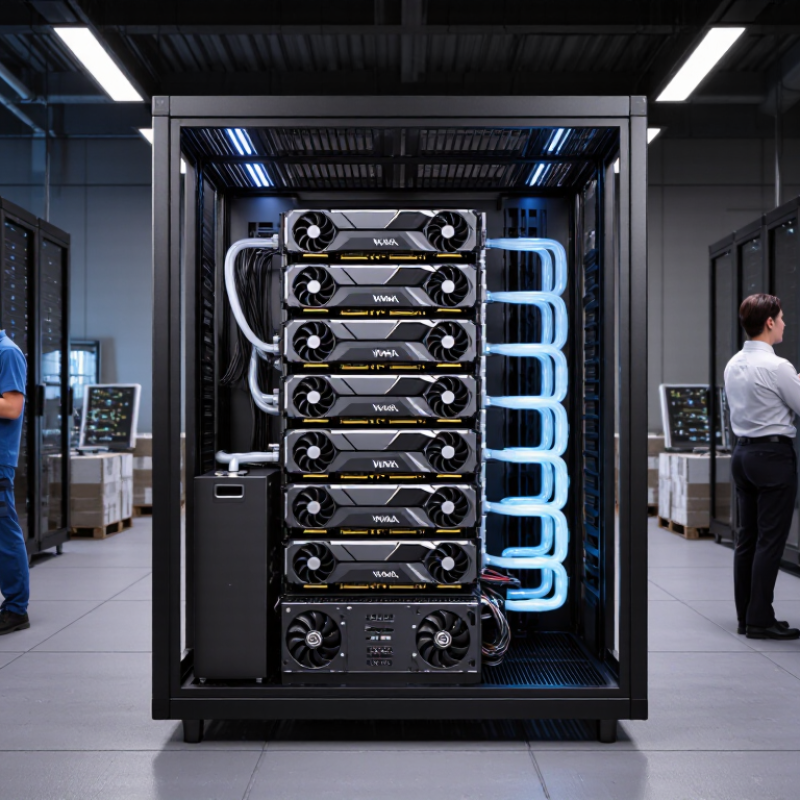
China Best Custom GPU Server Builder for Global Buyers

What a Custom GPU Server Builder in China Does

A custom GPU server builder in China turns a workload brief into a system that can be assembled, tested, and shipped. The process starts with practical questions: Which models will run? How many GPUs are needed? What rack space, power, and cooling are available? Clear answers help prevent costly mismatches later.

The builder then selects compatible processors, memory, storage, network cards, and GPU layouts. For example, a team training large models may need fast GPU interconnects, while an inference server may benefit more from balanced memory and network capacity. Engineers check chassis depth, airflow paths, power supplies, and service access. Small details matter. A cable placed poorly can restrict airflow or complicate maintenance.

Before shipment, the system should undergo hardware checks and workload-relevant testing. Buyers should request configuration records, test results, warranty terms, and guidance for installation. A reliable builder explains trade-offs instead of promising that every design is ideal. The first configuration is rarely perfect; adjustments may follow real-world testing. That is worth admitting. Clear communication across time zones and careful packing also help protect equipment during delivery.

Core Components and GPU Server Configurations

A useful GPU server configuration begins with the workload, not the maximum number of accelerators. For a compact inference node, two or four double-width GPUs may offer enough capacity while leaving room for airflow and service access. Training workloads often need more GPU memory, stronger host CPUs, and high-bandwidth links between accelerators. Memory matters too. Pairing large GPUs with insufficient system RAM can slow data preparation before computation even begins. Fast local NVMe storage helps feed datasets, while separate boot and scratch drives make maintenance less disruptive. Small choices compound.

Power and cooling determine whether a configuration performs reliably under sustained load. An eight-GPU chassis needs more than a high-rated power supply; engineers should check peak draw, circuit capacity, and thermal limits together. Airflow is not a detail. Dense cards can create hot spots near the rear of the chassis, especially in crowded racks. Liquid cooling can support higher density, but it adds plumbing and maintenance considerations. Network design should match the job: distributed training may benefit from high-speed Ethernet or InfiniBand, while a single-node workload may not. During commissioning, test sustained GPU load, temperatures, and power use—not just brief startup. A tidy parts list can still miss real operating conditions; configuration choices deserve a second look.

How Global Buyers Define Their Server Requirements

Global buyers rarely begin with a model number; they begin with the work the server must perform. A research group may need four GPUs for model training, while a visualization studio may prioritize memory capacity and steady frame delivery. Ask about typical job size, daily runtime, and expected growth over the next two years. Specify GPU count, power limits, rack depth, and available cooling. Small details matter. Keep it measurable.

Network design deserves equal attention. If several servers share datasets, document the required bandwidth, port type, and storage capacity before requesting a quote. For a single workstation-style node, noise, service access, and delivery dimensions may matter more than dense rack packaging. List operating system, virtualization, monitoring, and support expectations, then ask which items are tested before shipment. Some teams choose a GPU count too early; that shortcut can leave power or airflow as the limiting factor. A clear requirement sheet helps a custom builder compare configurations, flag trade-offs, and confirm assumptions in writing.

From Custom Design to Testing and International Delivery

A custom GPU server begins with a clear workload, not a parts list. A builder should ask about model sizes, data movement, user load, and available rack space. These answers shape the number of accelerators, memory capacity, network connections, and power requirements. Small details matter. A chassis that fits on paper may still leave too little room for cables or service access.

Design involves trade-offs. More airflow can improve cooling, but it may increase noise and require careful fan placement. Engineers can review thermal limits, power distribution, and component compatibility before assembly. Not every first layout works. A revised design is normal, and changes should be documented so buyers understand what was adjusted and why.

Then comes testing. Each system can undergo hardware checks, firmware review, temperature monitoring, and workload-based validation. Clear test records help buyers assess what was verified, though no test can predict every operating condition. Before international delivery, the server should be securely packed, labeled, and accompanied by accurate configuration and shipping documents. Buyers should confirm destination requirements and delivery terms with their logistics provider. A small omission can delay arrival. On receipt, checking the package and recording any visible damage makes follow-up easier.

China Best Custom GPU Server Builder for Global Buyers — From Custom Design to Testing and International Delivery

Typical nominal household supply voltages vary by destination market. Confirm local electrical requirements and verify that the selected server power supplies support the destination’s input range before shipment.

How to Evaluate a Builder for Global Deployment Needs

A custom GPU server builder should understand where each system will run, not just how many accelerators fit inside a chassis. Share the target rack depth, available power, expected workload, and cooling limits before comparing quotes. Ask for a configuration sheet that lists GPU models, memory, networking, storage, and power draw. Details matter.

Global deployment adds practical tests. Confirm the server supports the voltage and power connections at each site, and ask how it will be packed for long-distance shipping. Request burn-in results, temperature readings, and a clear process for handling damaged parts or failed components. Test it early. A short remote-management demonstration can reveal whether your team can monitor fans, temperatures, and alerts without being beside the rack.

Support is as important as hardware. Check response hours, spare-part locations, warranty coverage, and whether troubleshooting is available across time zones. Ask for written answers, not only assurances during a sales call. A builder may offer an impressive specification but struggle to document small details, such as firmware versions or cable layouts. That gap deserves attention. I would also leave room for a pilot deployment; site conditions often differ from the original plan, and not every issue appears in a lab test.

China Best Custom GPU Server Builder for Global Buyers - How to Evaluate a Builder for Global Deployment Needs

Evaluation Dimension What to Verify Practical Deployment Considerations Evidence to Request
GPU configuration Supported GPU count, form factor, memory capacity, interconnect, and validated server configurations. Confirm that the intended workload, GPU layout, host CPU, memory, and accelerator interconnect are supported together—not just individually. Configuration-specific bill of materials, compatibility matrix, and system validation results.
Thermal design Airflow direction, fan redundancy, operating-temperature range, and supported air or liquid cooling options. Dense GPU systems can produce substantial heat. Check facility cooling capacity, rack airflow, and any requirements for coolant distribution or maintenance. Thermal test report, installation requirements, airflow diagrams, and cooling-system specifications.
Power and redundancy Maximum and typical power draw, power-supply redundancy, input voltage and frequency, and connector requirements. Compare the server’s documented input requirements with local power distribution and rack capacity. Allow for peak load, not only average consumption. Power budget, PSU datasheets, redundancy behavior, and region-specific power-cable options.
Rack and site fit Chassis dimensions, rack-unit height, weight, rail compatibility, and service clearance. Check rack depth, floor loading, lift access, and the ability to remove or service components at the destination site. Mechanical drawings, shipping dimensions and weight, rail-kit details, and installation guide.
Networking and storage Network interface options, PCIe expansion, storage bays, boot-device choices, and I/O layout. Match network bandwidth and storage throughput to the workload, cluster fabric, and available switches and cabling. Port map, expansion-slot layout, storage compatibility list, and tested throughput details where available.
Firmware and software System firmware process, supported operating systems, driver and accelerator software versions, and update policy. Confirm version compatibility for the planned deployment and define how security updates, rollback, and configuration changes are managed. Compatibility documentation, firmware release notes, update procedures, and a sample software bill of materials.
Reliability and validation Burn-in duration, component-level testing, stress-test coverage, and procedures for detecting faults before shipment. Ask how the exact configured system is tested under sustained compute, memory, storage, and thermal load before dispatch. Factory test checklist, sample test report, serial-number traceability, and acceptance-test criteria.
Regional compliance Applicable safety, electromagnetic compatibility, environmental, and import requirements for the destination market. Requirements vary by jurisdiction and product configuration. Verify that the documents and markings apply to the exact system being imported. Applicable declarations, test documentation, product labels, and confirmation of destination-market requirements.
Shipping and customs Packaging method, shipment insurance, export documents, customs data, and delivery terms. Agree who handles freight, import clearance, duties, taxes, and final-mile delivery. Plan for handling restrictions and delivery-site access. Packing specification, commercial invoice example, packing list, shipment schedule, and written delivery-term responsibilities.
Warranty and service Warranty length, coverage exclusions, repair location, parts availability, and support hours. For overseas deployments, clarify shipping costs for repairs, local service options, response commitments, and the process for urgent incidents. Written warranty terms, service-level commitments, escalation contacts, and spare-parts plan.
Customization control How configuration changes are reviewed, documented, approved, and tested before production. Make sure substitutions for components, firmware, or cabling require approval and do not invalidate system-level validation. Change-control procedure, final approved bill of materials, and written notification policy for substitutions.
Commercial readiness Quotation validity, lead-time assumptions, payment milestones, order minimums, and cancellation terms. Separate production lead time from shipping and customs time. Confirm how component availability affects the delivery commitment. Itemized quotation, delivery schedule, payment terms, and written assumptions or exclusions.

FAQS

How should a team choose the number of GPUs?

Start with the workload, typical job size, and expected growth. Two or four GPUs may suit a compact inference node. More is not always better.

Why does system memory matter in a GPU server?

System RAM supports data preparation before GPU computation begins. Too little RAM can slow a server, even when its GPUs have substantial memory.

What storage setup can help feed datasets?

Fast local NVMe storage can serve active datasets. Separate boot and scratch drives may also make maintenance less disruptive.

What should engineers check before running an eight-GPU system?

Check peak power draw, circuit capacity, and thermal limits together. Test sustained workloads, not just startup. Brief tests can miss hot spots.

When is high-speed networking useful?

Distributed training across several servers may need high-bandwidth connections. A single-node workload may not. Match the network to actual data movement.

What details should buyers include in a requirements sheet?

List GPU count, power limits, rack depth, cooling, storage, and network needs. Include operating system, monitoring, and support expectations. Keep it measurable.

What should happen during custom design and testing?

Engineers should review airflow, power distribution, and component compatibility before assembly. Hardware checks, firmware review, and workload-based testing can reveal problems. Not every first layout works.

What should buyers check before and after international delivery?

Confirm destination requirements and delivery terms with the logistics provider. Check the package on arrival and record visible damage. Small omissions can cause delays.

Conclusion

A custom gpu server builder helps global buyers turn computing requirements into practical server designs. This process begins by identifying the intended workloads, performance targets, budget, operating environment, and future expansion plans. Based on these needs, buyers can compare configurations involving processors, GPUs, memory, storage, networking, power, and cooling. The right balance depends on factors such as workload intensity, data volume, rack space, and maintenance preferences.

From initial design through assembly, testing, and international delivery, clear communication helps keep the project aligned with technical and logistical expectations. Buyers should evaluate a builder’s engineering capabilities, customization process, quality checks, documentation, support, and ability to coordinate shipping for their destination. A careful assessment can help organizations choose a GPU server solution that fits their deployment needs, performs reliably, and remains adaptable as requirements change.

Sienna

Sienna

Sienna is a skilled marketing professional with a deep expertise in our company’s core products and services. With a passion for innovation and detail, she plays a pivotal role in crafting insightful blog posts that not only highlight the unique features of our offerings but also provide valuable......