Cloudion
Choosing an AI training server manufacturer in 2026 means looking beyond headline GPU counts. Large models can quickly expose limits in memory capacity, storage throughput, and network bandwidth. A server with eight accelerators may look impressive, yet perform poorly if its cooling system cannot sustain heavy workloads. Details matter: GPU-to-GPU links, power delivery, rack density, and access to replacement parts can shape daily operations. Small choices add up.
This guide compares ten manufacturers through practical criteria, including accelerator options, system design, workload flexibility, service support, and documented product specifications. It is intended to help technical teams ask better questions, not to declare one supplier right for every organization. A university lab, a cloud provider, and an enterprise research group may need very different configurations. No ranking is perfect. Product lines and availability also change, so readers should verify current specifications and service terms directly with each vendor. Be cautious of broad performance claims without details about the model, software stack, and test conditions. The strongest shortlist is usually the one that fits your workloads, power budget, and deployment plans—not simply the one with the biggest numbers. Some comparisons remain difficult because vendors publish information at different levels of detail. That gap deserves attention, too.
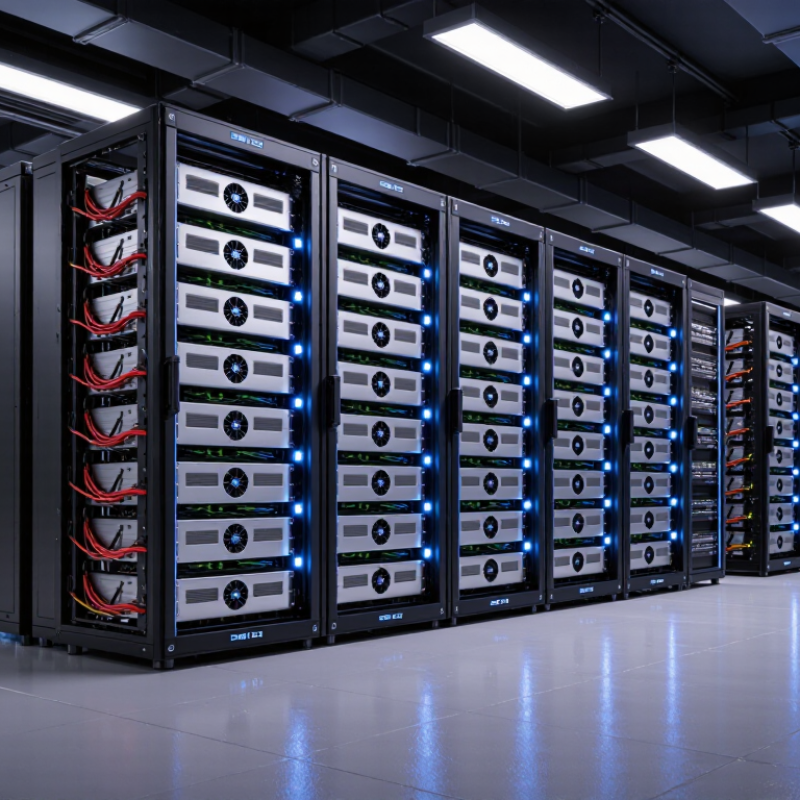
What Defines an AI Training Server in 2026
An AI training server is built to keep large workloads moving across multiple accelerators without wasting time on data transfers. Its design includes more than powerful processors. High-bandwidth memory, fast interconnects, and balanced storage all affect how efficiently a model can train. Memory matters.
In practice, teams assess whether accelerators can share data quickly, whether network links support distributed training, and whether storage can feed batches without long pauses. A system may look impressive on a specification sheet yet perform unevenly when several jobs run together. That gap is worth checking.
Power delivery and cooling are equally practical concerns. Dense accelerator configurations produce substantial heat, so airflow, liquid-cooling options, and rack capacity can shape deployment choices. Operators should also examine monitoring, firmware updates, component access, and workload testing. Small details count. A clear service plan helps reduce downtime, though it cannot prevent every interruption.
The right server depends on model size, training frequency, and the facility’s available power and cooling. Benchmarks should reflect real workloads, not only peak figures. Even then, results vary with software and data pipelines. There is no perfect configuration; teams sometimes discover bottlenecks only after deployment.
Evaluating AI training server manufacturers starts with the workload, not the headline GPU count. Ask how a proposed system handles your model size, data format, and target training time. Request measured results from a workload similar to yours, including batch size, precision, and interconnect settings. A polished benchmark can hide a poor fit.
Look closely at the complete configuration. Check accelerator memory, host memory, storage throughput, and network bandwidth as a balanced system. Ask for power draw under sustained training, cooling requirements, and noise levels in the intended rack. Small details matter. A server that throttles after an hour may look fine in a short demonstration. Confirm that service staff can diagnose hardware faults and provide replacement parts within a clearly stated timeframe.
The evaluation should also cover software and long-term support. Ask how firmware, drivers, and orchestration tools are tested together, and whether compatibility guidance is documented. Request a sample deployment plan, warranty terms, and realistic maintenance costs. Do not rely on vague promises. In one common evaluation mistake, teams compare purchase prices but overlook integration labor and downtime. That comparison needs another pass. Manufacturers should explain trade-offs plainly, including cases where a smaller configuration may suit the workload better. Their answers may still leave gaps; record those gaps and verify them with a controlled pilot before committing.
Choosing among ten leading manufacturers means comparing platform designs, not just processor counts. A useful review should note accelerator density, memory bandwidth, fabric topology, and service access. IDC projected global spending on AI-centric systems would rise from $235 billion in 2024 to $632 billion by 2028, a 29% compound annual growth rate. That forecast signals demand, but it does not prove every high-density server suits every workload.
Platforms differ in how they balance compute and heat. Some use compact, eight-accelerator nodes with high-speed links; others emphasize modular trays, flexible networking, or liquid cooling. Uptime Institute’s 2024 Global Data Center Survey highlights power availability as an ongoing data-center concern, making rack-level power draw a practical comparison point. Cooling matters. Ask for measured performance under sustained workloads, not only peak figures. Check service intervals, replacement access, and compatibility with existing power and cooling systems. These details can outweigh a small benchmark lead.
A careful shortlist should compare the ten manufacturers against the same workload and operating assumptions. Record throughput, power use, and failure recovery under load. Even so, paper comparisons can miss messy deployment realities: cabling, coolant maintenance, and staff training all take time. That is worth reflecting on. A platform that looks efficient in a lab may need different facility work at scale.
The profiles below compare common AI server platform designs without identifying companies or brands. Accelerator counts, memory, networking, and cooling options vary by configuration; the entries are illustrative market-wide configurations, not vendor-specific product specifications or a ranked list.
| Profile | Server platform class | Accelerators per node | Host architecture | Typical system memory | Scale-out networking options | Cooling approach | Common use case |
|---|---|---|---|---|---|---|---|
| 01 | Dense multi-accelerator training node | 8 | Dual-socket server CPUs | About 1–4 TB | 200–800 Gb/s Ethernet or InfiniBand options | Air or direct liquid cooling, depending on power and configuration | Large-model training and distributed deep learning |
| 02 | Eight-accelerator PCIe server | Up to 8 | One or two CPU sockets, subject to system design | About 512 GB–4 TB | 100–400 Gb/s Ethernet or InfiniBand options | High-airflow air cooling; liquid options on some configurations | Model training, fine-tuning, and accelerated computing |
| 03 | Four-accelerator compute node | 4 | Single- or dual-socket server CPUs | About 256 GB–2 TB | 100–400 Gb/s Ethernet or InfiniBand options | Air cooling; liquid cooling available in selected designs | Mid-sized training clusters and research workloads |
| 04 | Two-accelerator general-purpose server | 2 | Single- or dual-socket server CPUs | About 128 GB–1.5 TB | 25–200 Gb/s Ethernet options | Standard or high-airflow air cooling | Development, fine-tuning, and smaller training jobs |
| 05 | Single-accelerator workstation-class server | 1 | Single-socket server CPU or workstation CPU | About 64 GB–1 TB | 10–100 Gb/s Ethernet options | Air cooling | Prototyping, inference, and model development |
| 06 | High-memory accelerator server | 2–8 | Typically dual-socket server CPUs | About 1–8 TB, depending on configuration | 100–800 Gb/s Ethernet or InfiniBand options | Air or liquid cooling, depending on system density | Large datasets, memory-intensive training, and analytics |
| 07 | Storage-rich AI training node | 2–8 | Single- or dual-socket server CPUs | About 256 GB–4 TB | 100–400 Gb/s Ethernet or InfiniBand options | High-airflow air cooling; liquid options vary | Data preprocessing and training with locally staged datasets |
| 08 | Rack-scale liquid-cooled compute node | 4–8 | Typically dual-socket server CPUs | About 512 GB–4 TB | 200–800 Gb/s Ethernet or InfiniBand options | Direct liquid cooling; facility water requirements vary | High-density clusters with substantial sustained compute loads |
| 09 | Flexible PCIe expansion server | 1–4 | One or two CPU sockets, depending on chassis | About 128 GB–2 TB | 25–400 Gb/s Ethernet options | Air cooling, with chassis-dependent airflow design | Mixed AI, simulation, and general-purpose compute |
| 10 | Compact edge or branch AI server | 1–2 | Single-socket server CPU or embedded server CPU | About 32 GB–512 GB | 1–100 Gb/s Ethernet options | Air cooling; operating limits depend on chassis and environment | On-premises inference, vision workloads, and edge analytics |
AI training servers are not interchangeable boxes with larger processors. Their design depends on model size, data shape, and how often workers exchange results. For large language models, accelerators need fast links between them to keep distributed training moving. A slow connection can leave costly compute waiting. Memory capacity matters too. Oversized batches may not fit, even when processor power looks impressive on paper.
Other workloads create different pressures. Image training often reads many small files, so storage and data-loading speed can become bottlenecks. Some teams benefit more from local high-speed storage than from adding another accelerator. It sounds less exciting. It can still make the training run smoother. Network bandwidth also matters when datasets sit on shared storage or jobs span several racks.
Power and cooling deserve close attention during selection. Dense systems can draw substantial power and produce concentrated heat, so rack layout, airflow, and liquid-cooling options may shape the final design. Ask manufacturers for measured results under a workload resembling yours, not just peak specifications. Then check service access and component replacement procedures. In practice, teams sometimes discover their main bottleneck only after deployment. That is frustrating, and a little humbling. No specification sheet captures every real-world trade-off.
Choosing an AI training server manufacturer starts with the workload, not the largest advertised GPU count. Check whether the system can support your model sizes, training methods, and expected growth. Ask for tested configurations, including memory capacity, accelerator interconnects, and storage throughput. A useful answer should explain trade-offs, not just list components. Small details matter.
Power and cooling deserve close attention. Request measured power draw under sustained training, not only peak figures. Confirm rack depth, circuit requirements, airflow direction, and noise levels before delivery. A server that fits on paper may still overheat in a crowded room. Ask how the manufacturer tests thermal performance and handles firmware updates. These details affect uptime and operating costs.
Support quality can be harder to judge. Ask about response times, spare-part availability, warranty coverage, and the process for diagnosing a failed accelerator. Review sample burn-in reports and confirm that network and storage components have been tested together. If possible, speak with a technical contact before purchase. I would not rely on a polished specification sheet alone; it cannot show how clearly a supplier handles a difficult fault. Even careful planning has gaps. Check those early.
It combines accelerators, high-bandwidth memory, fast interconnects, and storage. Balance matters.
Fast links help accelerators share data during distributed training. Slow links can leave expensive processors waiting.
Yes. Several jobs may expose bottlenecks that specifications hide. Real workload tests help reveal them.
Fast storage can deliver many small files more smoothly. Sometimes it helps more than adding another accelerator.
Dense systems draw substantial power and create concentrated heat. Check airflow, rack space, and cooling options before delivery.
Request measured workload results, sustained power figures, and component test reports. Ask how faults are diagnosed.
Response times, spare-part access, warranty coverage, and firmware updates all matter. They cannot prevent every interruption.
Match it to model size, training frequency, and facility capacity. Even careful planning can miss a bottleneck.
In 2026, an AI training server is more than a powerful computer: it is a carefully balanced platform for accelerating model training, moving data efficiently, and managing heat and power demands. This overview explains the components and capabilities that distinguish these systems, then outlines how to assess an ai training server manufacturer by considering compute performance, memory and networking, scalability, reliability, support, and total operating requirements.
The article surveys ten leading manufacturers and their server platforms without treating one design as suitable for every task. It compares how configurations can differ for large-scale model training, specialized workloads, and varying deployment needs. By understanding these trade-offs and the practical factors involved in selecting a supplier, readers can better identify a server platform that aligns with their technical goals, infrastructure, budget, and plans for future growth.
